Sterling Silver vs 925 Silver: What’s the Difference in Bracelets?
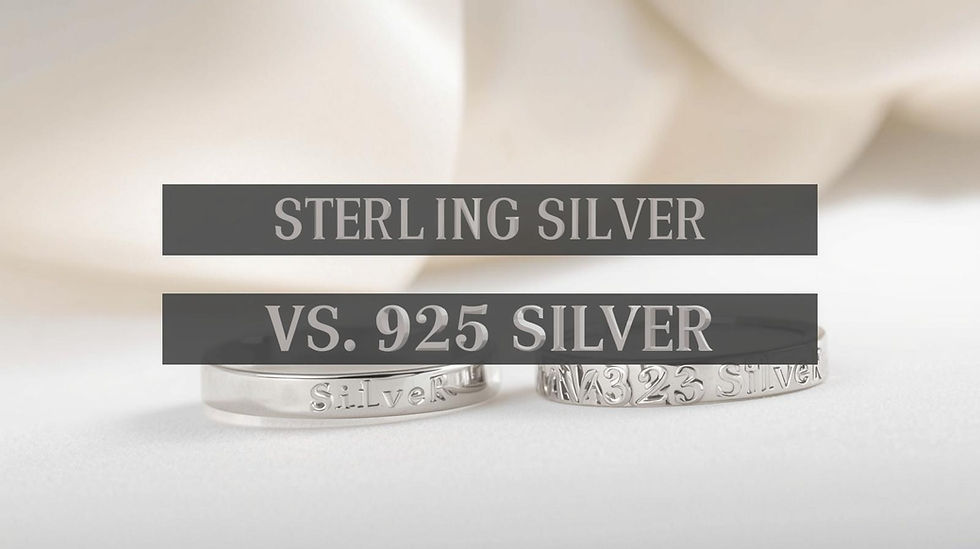
If you have ever spent a few minutes browsing through a jewelry store or scrolling through an online boutique, you have likely encountered two terms that seem to be everywhere: Sterling Silver and 925 Silver. For many of us, these terms spark a bit of a mystery. Is one better than the other? Is 925 a lower grade of metal? Does Sterling imply a certain level of luxury that a numerical stamp does not?
When you are looking for something as personal and enduring as a bracelet, these questions become even more important. A bracelet is a piece of jewelry that sees a lot of action. It clinks against your desk while you work, it moves with your hands while you gesture, and it is constantly exposed to the oils and lotions on your skin. Understanding exactly what is in your metal is the first step toward making a purchase you will love for years.
The short answer, which might surprise many, is that Sterling Silver and 925 Silver are actually the same thing. They are two different names for the exact same alloy. However, the history behind these names and why we use a specific blend of metals for bracelets is a fascinating journey into the world of metallurgy and craftsmanship.
The Recipe for the Perfect Bracelet
To understand why your bracelet is labeled as 925 or Sterling, we first have to look at the nature of silver itself. In its purest form, silver is an incredibly soft metal. If you were to make a bracelet out of 100% pure silver, it would be almost as malleable as clay. You could bend it with your fingers, and it would lose its shape within a few days of wear. For a jewelry item like a bracelet, which needs to maintain its structure and hold onto intricate clasps or gemstones, pure silver is simply too delicate.
To make silver functional for jewelry, humans discovered centuries ago that it needs to be mixed with a harder metal. This process creates an alloy. The international standard for this alloy is exactly 92.5% silver and 7.5% of another metal, which is almost always copper.
The 92.5%: This is the silver content that gives the bracelet its brilliant white luster and its value.
The 7.5%: This is the strength. Copper is the preferred choice because it hardens the silver without compromising its beautiful color.
When you see the "925" stamp on the inside of a bracelet, it is simply a shorthand way of saying that the piece contains 92.5% silver. "Sterling" is the traditional name for this specific ratio.
Why Do We Call It Sterling?
The word "Sterling" has deep historical roots. While there are several theories, many historians believe the term dates back to 12th century England. A group of merchants from Northern Germany, known as the Easterlings, traded with the British using silver coins that were exceptionally consistent in their purity. These "Easterling" coins eventually became the standard for the British currency system, and the name was shortened to "Sterling."
By the time the 1300s rolled around, King Edward I established a law that all silver items must meet this Sterling standard. This was one of the world's first forms of consumer protection. It ensured that when someone bought a silver item, they knew exactly how much precious metal they were getting. Today, whether a designer calls it 925 or Sterling, they are honoring a standard of quality that has existed for nearly a thousand years.
The Role of a Quality Manufacturer
Because silver is a global commodity, the quality of a bracelet depends heavily on the integrity of the people making it. In a market flooded with plated metals and "silver colored" alloys, finding a source that stands by the 925 standard is vital for both retailers and collectors. As a dedicated Silver Bracelet Supplier, Luckincraft has built its reputation on the pillars of transparency and precision. They recognize that a bracelet is more than just a fashion statement; it is often a gift, an heirloom, or a personal milestone.
By maintaining strict control over the alloy process, a professional Silver Bracelet Supplier ensures that every link, charm, and clasp meets the rigorous 925 requirements. This commitment to quality means the jewelry is not only beautiful when it leaves the showroom but remains durable and safe for long term wear. Whether you are looking for a minimalist chain or a bold statement cuff, the hallmark of quality starts with the manufacturer’s dedication to the Sterling standard.
Why Sterling is the Best Choice for Bracelets
When comparing silver to other metals like stainless steel, brass, or gold, Sterling Silver occupies a "sweet spot" of value and performance.
1. Durability for Daily Life
Bracelets are high impact jewelry. Unlike earrings that sit safely on your lobes or necklaces that rest against your chest, bracelets are constantly in motion. The 7.5% copper alloy in 925 silver provides the structural integrity needed to prevent the bracelet from snapping or warping. It allows for the creation of delicate "paperclip" chains and heavy "herringbone" styles that can withstand the tugs and pulls of daily activity.
2. Hypoallergenic Properties
Many people have sensitivities to base metals like nickel, which is often found in cheaper fashion jewelry. High quality Sterling Silver is generally nickel free. Because 925 silver is mostly comprised of a precious metal and copper, it is a safe choice for individuals with sensitive skin. If a bracelet causes your skin to turn green or itchy, it is often a sign that it is not true 925 silver but rather a plated base metal.
3. Ease of Repair
One of the most overlooked benefits of 925 silver is that it can be repaired. If a link in a Sterling Silver bracelet breaks, a jeweler can easily solder it back together. If the surface gets scratched, it can be buffed and polished back to a mirror finish. This is not true for plated jewelry, where a scratch reveals the ugly base metal underneath and cannot be fixed.
Identifying Real 925 Silver Bracelets
Since 925 and Sterling are the same, how can you be sure your bracelet is authentic? There are a few "human" ways to check the quality of your piece without needing a lab.
The Hallmark: Look for a small stamp that says "925," ".925," or "S925." On a bracelet, this is usually found near the clasp or on a tiny hanging tag.
The Magnet Test: Silver is not magnetic. If you hold a strong magnet up to your bracelet and it sticks firmly, the piece likely has a core of iron or steel and is only silver-plated.
The Scent Test: Real Sterling Silver should not have a strong metallic smell. If a bracelet smells like pennies or old coins, it likely has a high concentration of copper or other base metals.
The Weight: Silver is denser than many cheap alloys. A 925 silver bracelet should feel substantial on your wrist, not like a light piece of plastic.
The Truth About Tarnishing
One of the most common complaints about silver is that it turns black or dull over time. Some people assume that if a bracelet tarnishes, it must be "fake" or low quality. In reality, the opposite is true. Tarnishing is a natural chemical reaction called oxidation, and it is actually a sign that you have real silver.
The copper in the 925 alloy reacts with sulfur in the air and the moisture on your skin to create silver sulfide, which is the dark coating we call tarnish. High quality bracelets will tarnish, but they can also be cleaned in seconds. A simple polishing cloth or a quick dip in a gentle cleaning solution will restore the original shine. Interestingly, the more you wear your silver bracelet, the less it will tarnish. The natural oils in your skin actually help "clean" the metal and prevent the sulfur from reacting as quickly.
Investing in a Silver Bracelet
When you buy a Sterling Silver bracelet, you are making a small investment in a precious metal. Unlike costume jewelry that loses all value the moment you leave the store, silver retains intrinsic value. While it is not as expensive as gold or platinum, it is a "noble metal" that holds its worth over time.
For many, the appeal of 925 silver lies in its versatility. It has a cool, sophisticated tone that complements almost every skin tone and outfit. It can be dressed up for a formal wedding or worn with a simple t-shirt and jeans. Because it is so much more affordable than white gold, it allows jewelry lovers to build a diverse collection of high quality pieces without breaking the bank.
Caring for Your Silver Bracelet
To ensure your 925 silver stays in peak condition, a little bit of care goes a long way. Since it is a metal that reacts to its environment, you should try to be mindful of where you wear it.
Avoid Chemicals: Remove your bracelet before swimming in chlorinated pools or using household cleaning supplies. Chlorine can permanently damage the metal and cause it to become brittle.
Storage Matters: When you aren't wearing your bracelet, store it in a small airtight bag or a lined jewelry box. This limits its exposure to the air and slows down the tarnishing process.
Last On, First Off: Make your bracelet the last thing you put on in the morning after your perfume and lotion have dried. Perfumes often contain chemicals that accelerate tarnishing.
Final Thoughts
The next time you find yourself looking at a beautiful bracelet and wondering about the difference between Sterling and 925, you can rest easy knowing that you are looking at two names for the same high standard of quality. Whether a designer uses the numerical "925" to emphasize the technical purity or the word "Sterling" to evoke a sense of tradition, the result is a durable, beautiful, and valuable piece of jewelry.
Choosing a silver bracelet is about finding a balance between art and science. It is about the 92.5% purity that catches the light and the 7.5% strength that handles the rhythm of your life. By sourcing your jewelry from a trusted Silver Bracelet Supplier and understanding how to care for the metal, you are not just buying an accessory; you are acquiring a piece of craftsmanship that can be passed down through generations. Silver has been a symbol of elegance for thousands of years, and in the form of a perfectly crafted 925 bracelet, it remains as relevant and radiant as ever.


Comments